Investigations
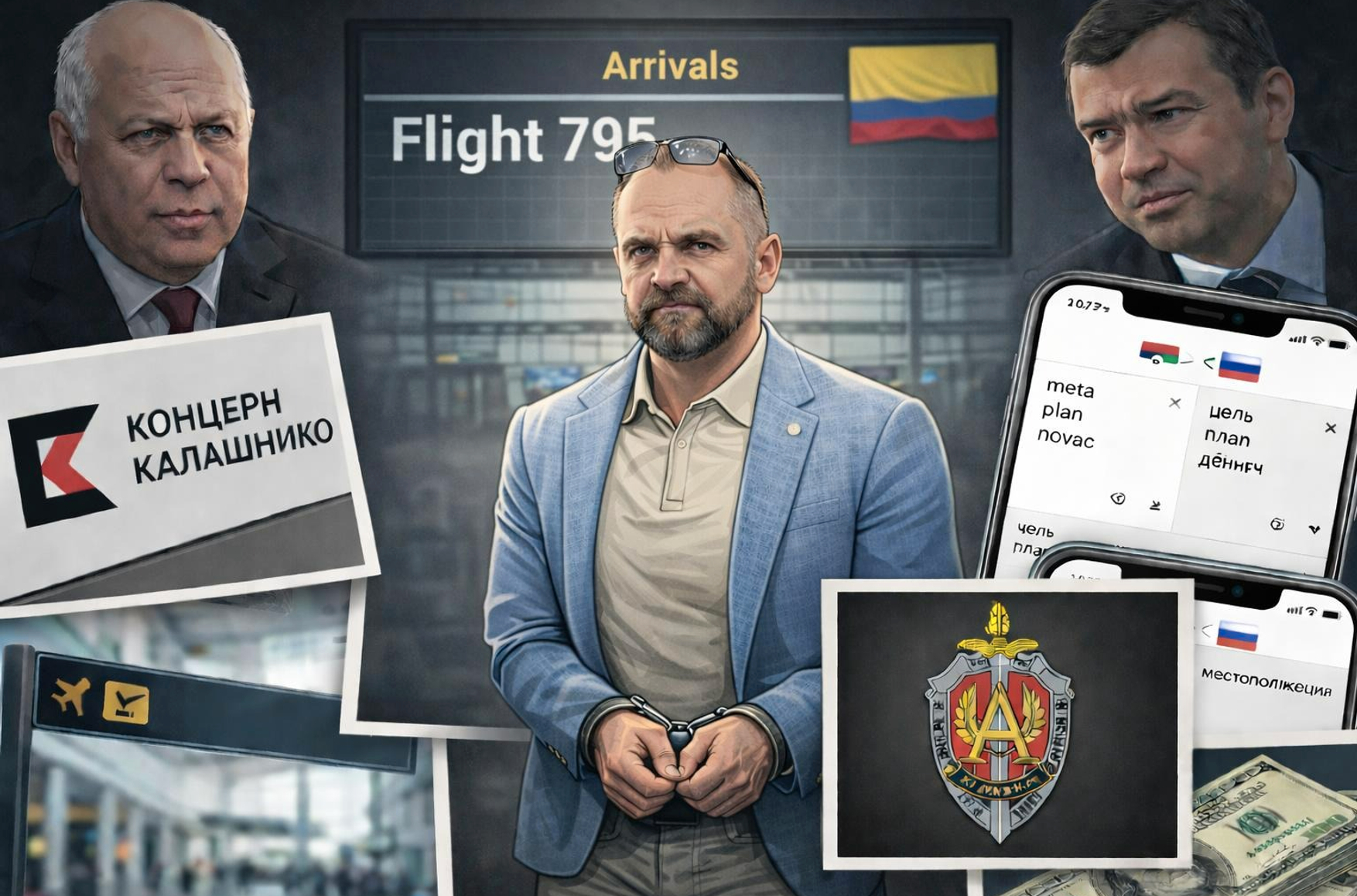
Center 795, which emerged after the start of Russia's full-scale war in Ukraine and comprises elite units from the GRU and FSB, was established as a top-secret and fully autonomous entity designed to carry out the most critical operations, ranging from military missions in Ukraine to political assassinations and abductions abroad. The Insider has managed to identify all of the center’s key leaders and sponsors, determine its location, and pinpoint its main areas of activity. One of its officers has already been arrested in Colombia on charges of organizing the kidnapping of multiple regime opponents. He was caught because he handled an agent using Google Translate.
A new unit, born from embarrassment
The Kalashnikov camouflage
An army start-up
Inside the machine: The architecture of Center 795
The recruitment pipeline
Center 795: A view from within
From Balashikha to Bogota
The asset, the bounty, and the translation logs
The fatal language gap
The unraveling
Fallout
In collaboration with Der Spiegel.
When Denis Alimov passed through the arrivals hall of El Dorado International Airport in Bogotá on the morning of February 24, 2026, he had the outward appearance of a middle-aged Russian tourist escaping Moscow's harsh winter: a salt-and-pepper goatee, a light travel bag, a connecting flight from Istanbul, and a reservation at a Cartagena beach resort.
Within minutes, Colombian migration officers had him in handcuffs. The Interpol Red Notice — activated as he flew in at the request of federal prosecutors in the Southern District of New York — had been waiting at the gate. Alimov stood accused of orchestrating the attempted assassination of two prominent Chechen dissidents based in Europe, having offered a bounty of $1.5 million on each of their heads — payable whether the target arrived in Russia dead or merely, in the deadpan vocabulary of Russian intelligence, “legally deported.”
Despite his appearance, Alimov, 42, was no ordinary tourist. A decorated veteran of the FSB's elite Alfa special forces unit, since 2023 he had served as a senior operative in Center 795, Russia's newest and most secretive assassination directorate, designed, according to leaked Russian intelligence documents, to be impossible to detect. Alimov was one of its star hires, and for two years he had run a global network of agents tasked with organizing the murder of political enemies of the Russian regime. But now the agents had failed to deliver, and one had been arrested. It was time for Alimov to take matters into his own hands.
Armed with a freshly issued non-biometric passport in a false identity, he had chosen the date revered by Russian spies and soldiers — Defender of the Fatherland Day — for his maiden undercover trip abroad. Around eight in the evening, as his comrades were raising toasts to an elusive victory, he was checking in for his flight to Istanbul at Vnukovo airport. Back at his apartment, his iPhone 16 sat on the desk buzzing with unanswered greetings.
Less than twenty-four hours later, Alimov was in custody, likely to be handed over to the “main adversary,” as Russian intelligence jargon refers to the United States.
The FBI had been tracking Alimov for over a year — in part, by reading the Google Translate-assisted exchanges between him and one of his would-be foreign assassins.
Armed with a court order, the FBI was reading the clear-text translations of a murder-for-hire plot in real time
The story of Center 795 begins in failure.
Between 2018 and 2022, Russia's military intelligence agency, the GRU, suffered a series of operational blunders tied to Unit 29155 — the clandestine directorate responsible for the Salisbury nerve-agent attack in Britain, the attempted coup in Montenegro, and a string of assassinations and bombings across Europe. Investigators, journalists, and open-source researchers had identified dozens of the unit's officers by name, photograph, and passport number — issued, in a lazy violation of basic tradecraft, in the same numerical sequence. Its operatives had stolen service funds to keep their families and mistresses in grand style. Worse, they had been so thoroughly burned that their biometric data sat in every customs computer outside Russia. The unit had become, in the words of one leaked internal assessment, “a liability.”
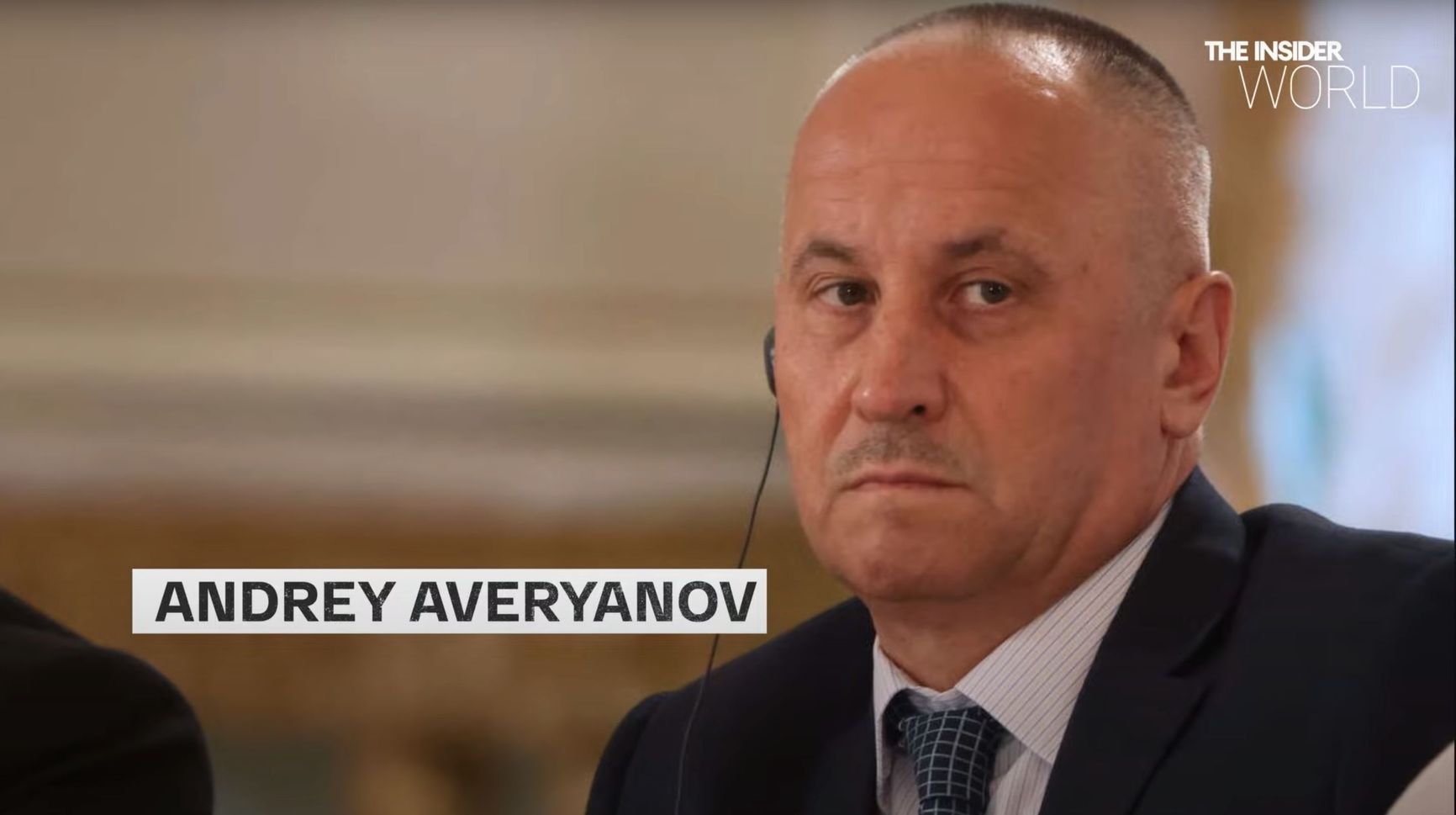
Unit 29155’s founding commander, General Andrei Averyanov, was not removed — the GRU could not afford to lose cadres amid the Kremlin's expanding war on Ukraine and the West. In fact he was given a broader brief running a new Service for Special Tasks, the name of a notorious KGB unit responsible for assassinating Leon Trotsky and Ukrainian nationalist leaders in the Soviet period. But the calculation in Moscow had shifted. What Averyanov’s unit needed, it was decided, was not rehabilitation but competition.
The new entity was established by a Russian General Staff order in December 2022 and designated Military Unit 75127 (recycling a defunct unit number previously deployed near the border with China), with the internal name Center 795. Unlike Unit 29155, which sat neatly within the GRU's hierarchy, Center 795 would be a wholly separate structure, reporting directly to Chief of the General Staff Valery Gerasimov. Its mandate was sweeping: not simply assassination but what Russian military planners call “full-cycle” operations — intelligence gathering, surveillance, sabotage, and, when required, killing — all within a single, self-contained command. Center 795 was designed to function as a shadow army. By June 2023, it was nearly fully staffed.
To provide the unit with cover, its architects chose not to house it within the GRU's existing bureaucratic structure. Instead, it was embedded inside the Kalashnikov Concern — the storied Russian arms manufacturer, a privately held company with a blocking minority stake reserved for the state defense conglomerate Rostec. Officers would be listed on Kalashnikov's payroll. Their operational base would be the Patriot Park military-industrial complex outside Moscow, where Kalashnikov maintained a two-story administrative building known as TMU-1. The new, clandestine operation’s training activities would be camouflaged as “test shooting” — a seemingly legitimate practice linked to Kalashnikov’s above-board arms production efforts.
The unit's ideological architect and principal backer, according to two sources with direct knowledge who spoke to The Insider, was Andrei Bokarev, a billionaire arms dealer best known as the controlling owner and president of Transmashholding, one of Russia's largest rail and defense conglomerates. Less well known is his deeper connection to Kalashnikov.
In 2014, Bokarev and a business partner acquired a 75% controlling stake in the concern, which up until that point had been owned by Rostec, Russia’s state-owned defense and industrial giant. Four years later, facing the prospect of Western sanctions, Bokarev ostensibly divested from Kalashnikov. What happened to his shares after Russia's full-scale invasion of Ukraine in 2022 is not publicly available, but the financial trail indicates he simply restructured his investment to elide his ownership.
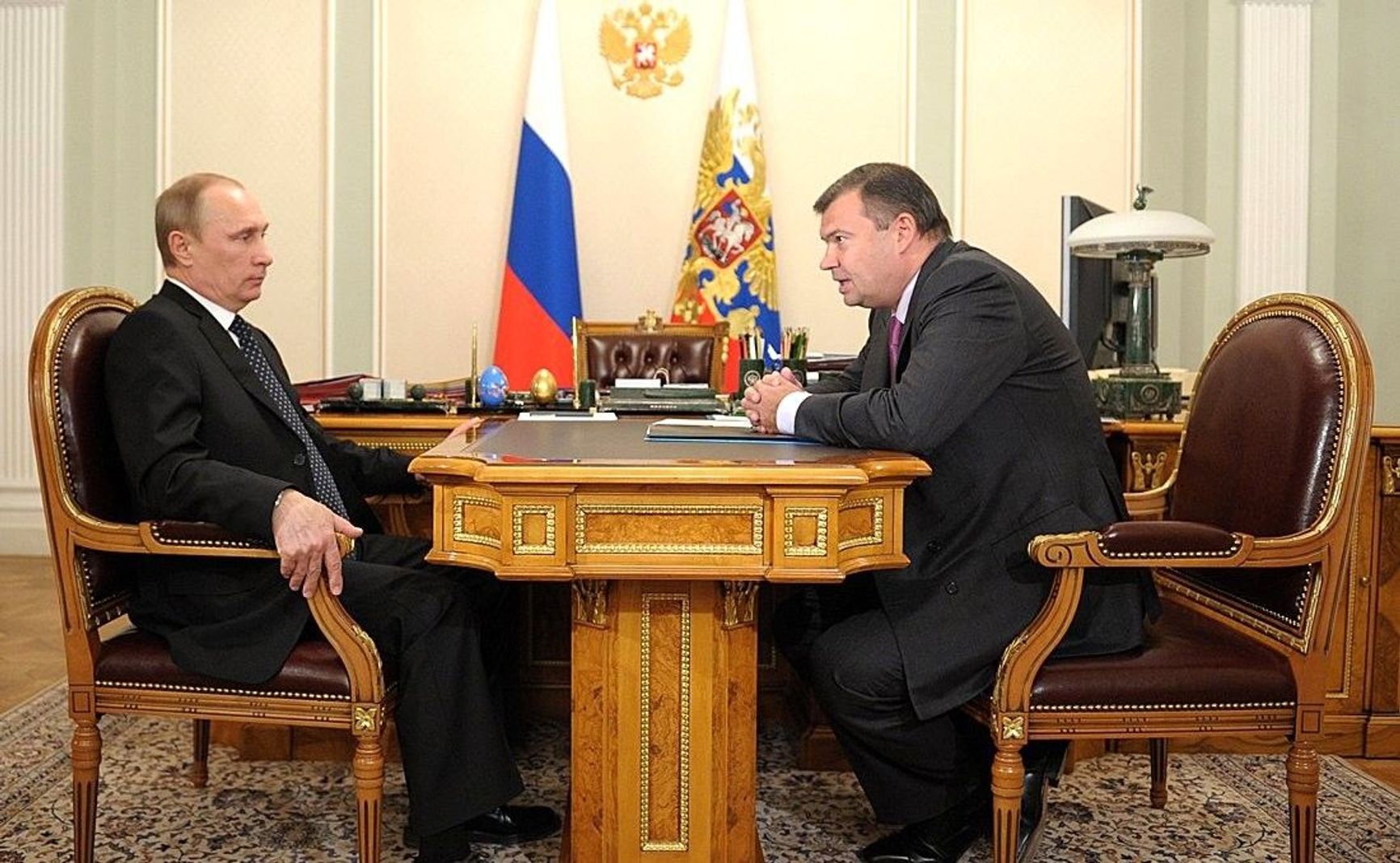
Bokarev’s tax declarations for the period 2019–2021 show a continuous stream of income flowing from Kalashnikov. He is also currently listed on the payroll of a company controlled by Alan Lushnikov, Kalashnikov's nominal president and self-declared principal shareholder. Lushnikov is a frequent guest on Bokarev’s private jet, with their latest joint flights dating from the end of 2025. Bokarev's influence over Kalashnikov’s strategic direction has therefore almost certainly not diminished.
The financing model for Center 795 echoes a pattern established by the late Yevgeny Prigozhin, the catering magnate turned mercenary chieftain who died in a suspicious plane crash in August 2023. According to state contracts established through Kalashnikov and Transmashholding, Bokarev channels a portion of his revenue from both into special state projects. Whereas Prigozhin's wealth built the Wagner Group private military company and bankrolled the Internet Research Agency (better known as the St. Petersburg “troll farm”), Bokarev's finances Center 795.
The arrangement initially suited Rostec CEO Sergei Chemezov, one of the most powerful figures in Russia's security establishment and among Putin's most trusted personal confidants. Their intimacy traces back to their shared KGB posting in Dresden in the 1980s, a bond that has outlasted the Soviet Union and survived decades of Kremlin realignment.
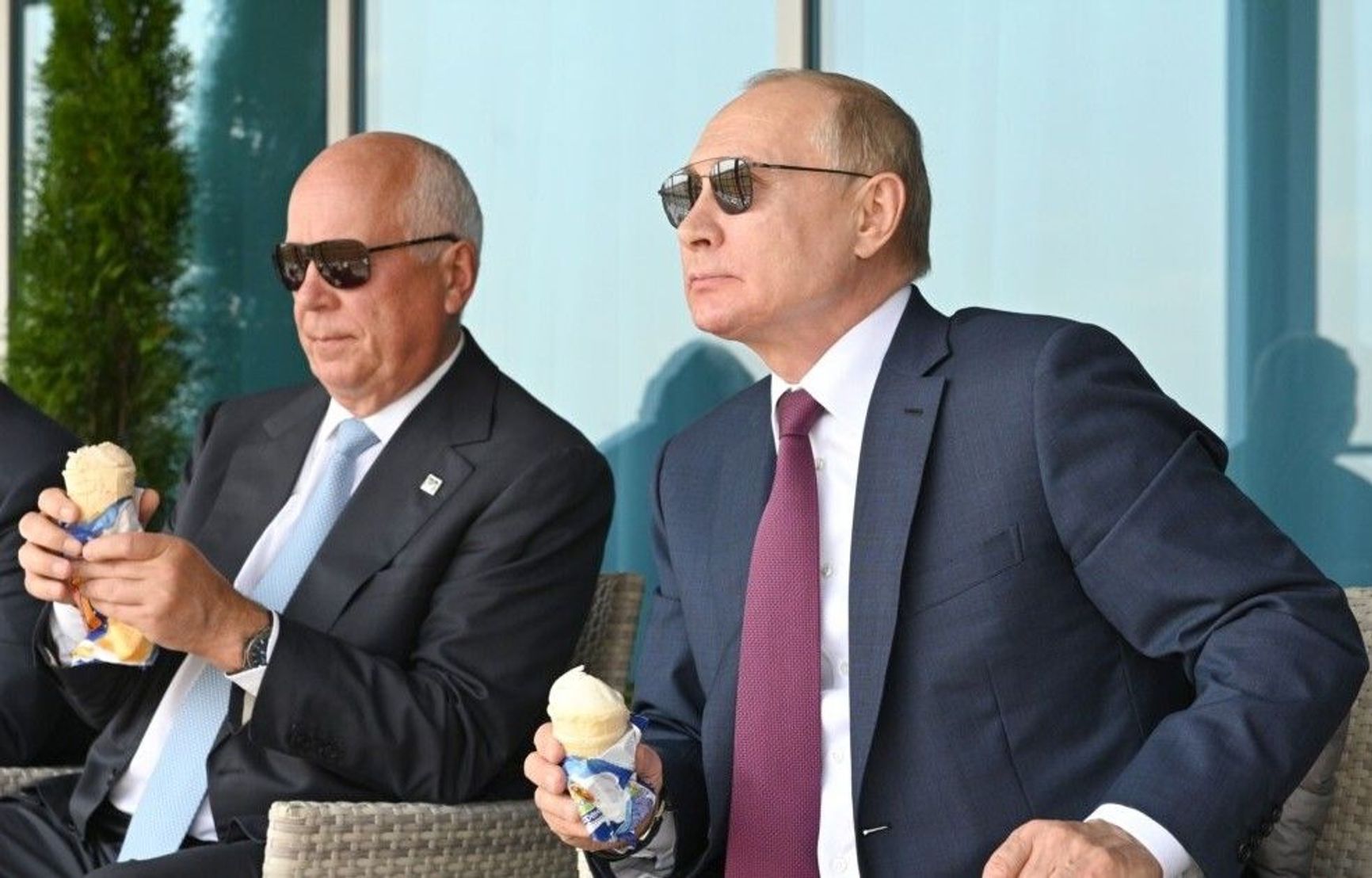
Through Center 795, established on Kalashnikov's premises, Chemezov acquired something he had long lacked: his own private army, commanded by a trusted former FSB operative who had come to Kalashnikov in 2019. The two oligarchs have cultivated a close relationship; Chemezov is a regular at Bokarev's birthday gatherings, and their families have traveled together on Bokarev's private jet.
That symbiotic arrangement has since grown complicated.
When Center 795 was stood up in late 2022, its mandate was framed around assisting the Russian war effort in Ukraine through battlefield intelligence, special operations, and sabotage behind enemy lines. This alone was hardly remarkable. Every major beneficiary of the Russian state was expected to contribute to Putin’s “special military operation,” and every large concern, from Gazprom to Lukoil to Rusal, faced pressure to stand up its own private military capacity. Helping the motherland in wartime was simply the cost of doing business.
But carrying out political assassinations in Western Europe was something else entirely.
According to a source close to Chemezov, operations of that kind — targeting Kremlin critics on foreign soil — were never part of his understanding of the unit's remit, but by the time the assassination operation that led to Alimov’s arrest was under way, the new remit of Center 795 couldn’t be undone. For Chemezov, whose carefully cultivated reputation as a relative moderate within the security establishment requires distance from the Kremlin's most extreme measures, the exposure of the unit's Western activities poses a particular liability, one his enemies — or business competitors — in Russia are well positioned to exploit.
To lead the unit, the informal politburo consisting of the General Staff and the two arms-manufacturing billionaires anointed Denis Fisenko, a 52-year-old Alfa unit veteran whose biography reads like a compressed history of post-Soviet Russian military power. A three-time recipient of the Order of Courage, Fisenko is also the Russian champion in combat weapons shooting among special forces units, as well as the author of the FSB special operations training regimen. What set him apart from conventional Spetsnaz commanders, however, was his subsequent corporate trajectory: between 2019 and 2023, he served as Deputy General Manager of the Kalashnikov Concern for Special Projects, overseeing 1,200 employees and managing, among other portfolios, the ZALA Aero division, which produces drones currently deployed by Russian forces in Ukraine. He also flew on joint flights with Bokarev on his private jet, and was certainly known personally and trusted by the billionaire. Fisenko was exactly the kind of officer the new unit required — a trusted man with the operational instincts of an elite commando and the administrative fluency of a corporate executive.
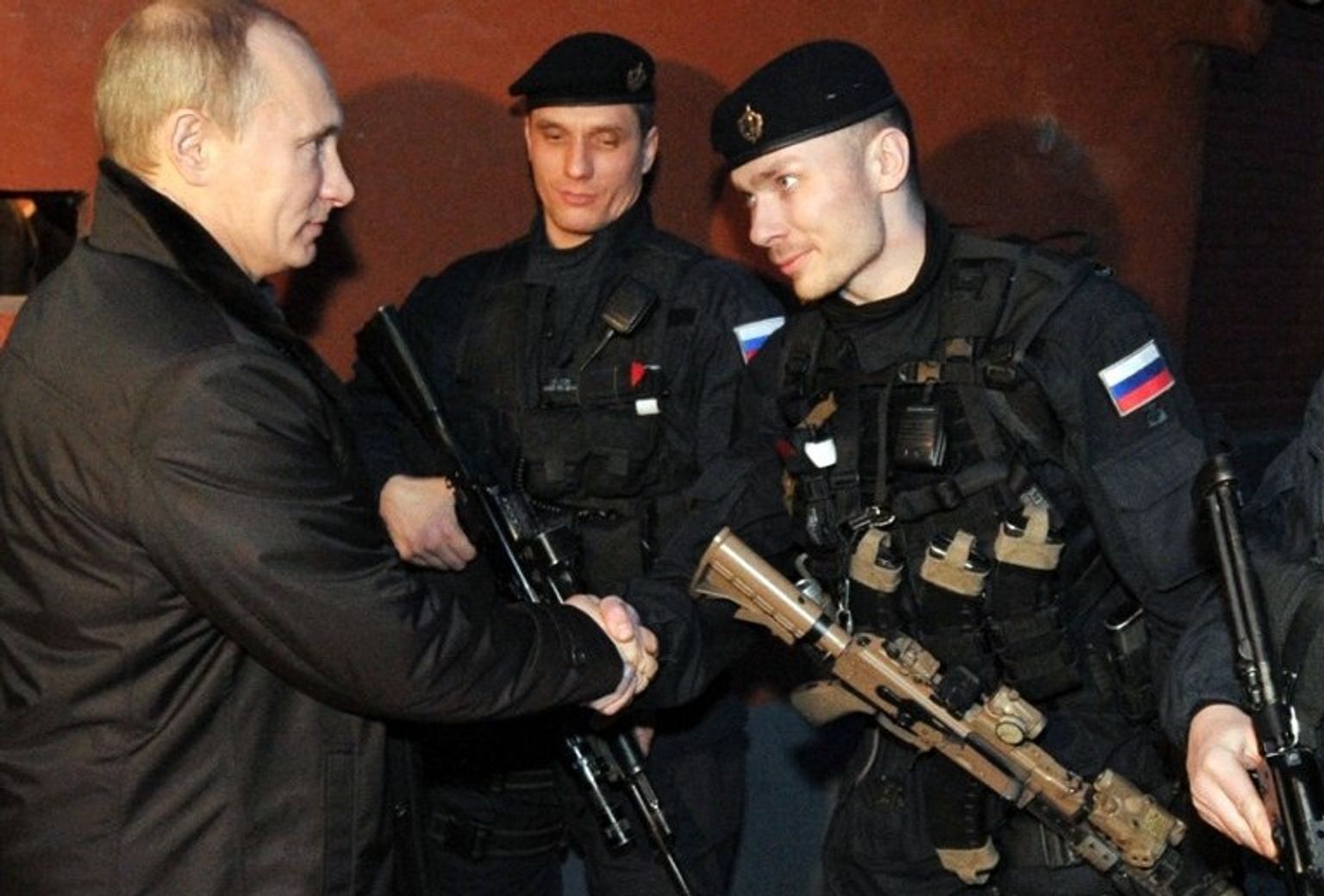
The latter quality was on full display in the PowerPoint presentation announcing the unit's structure to its Kremlin sponsors. Replete with infographics, organizational charts, growth projections, and icons of tanks and drones, it was indistinguishable from a Kalashnikov boardroom slide show. It also proved unexpectedly informative: Western intelligence operatives and investigative journalists — including the authors of this investigation — obtained it within months of its creation, offering a look at the entire anatomy and organizational structure of Putin’s new top-secret kill squad.
Center 795 fields approximately 500 officers divided into three directorates: Intelligence, Assault, and Combat Support. The Combat Support Directorate includes an armored department, an air defense unit, and an anti-tank section, reflecting the unit's design as a self-contained military force with an inventory that includes T-90A main battle tanks and Smerch multiple-launch rocket systems. From its inception, the unit was also intended to conduct cyber operations, signals intelligence, and information operations — in theory, a complete menu of modern hybrid warfare capabilities bundled under a single command umbrella.
![[object Object]](data:image/jpeg;base64,iVBORw0KGgoAAAANSUhEUgAAAAEAAAABCAAAAAA6fptVAAAACklEQVR4nGNiAAAABgADNjd8qAAAAABJRU5ErkJggg==)
Excerpts from a presentation by Center 795 prepared for Vladimir Putin in 2023 (translated into English)
Excerpts from a presentation by Center 795 prepared for Vladimir Putin in 2023 (translated into English)
Excerpts from a presentation by Center 795 prepared for Vladimir Putin in 2023 (translated into English)
The organizational blueprint of Center 795, which can be seen in a staffing spreadsheet from January 2023 obtained by The Insider, reveals a “full-cycle” mandate designed to bypass the bureaucratic and security vulnerabilities that previously compromised other GRU operations. By staffing the unit with high-tier veterans from the FSB's elite Alfa and Vympel squads — operatives like Denis Fisenko and Nikolay Zriachev who possess a “proven track record” — the Kremlin had created a hybrid entity capable of transitioning seamlessly from clandestine agent intelligence (12th Department) to heavy kinetic strikes (1st though 6th Departments).
The inclusion of internal artillery and armored departments, equipped with Smerch multiple-launch rocket systems, D-30 howitzers, and T-90A tanks, indicates that the unit was not merely intended for small-scale sabotage but was prepared for high-intensity, independent military engagements without the need for external support. Leaked correspondence among members of the Center corroborate this mandate: in the early months and years of the full-scale war in Ukraine, the Center sought to obtain intelligence on the locations of Ukrainian elite troops and foreign trainers as well as concentrations of the feared HIMARS missile-launchers, with the goal of targeting them with missiles or drones.
Furthermore, the organizational structure and the choice of staff indicate that the unit’s goals were clearly linked to transnational repression and targeted neutralization conducted under a veil of corporate deniability. Earmarking specialists in signals intelligence (13th Department) and UAV reconnaissance (14th and 15th Departments) alongside dedicated sniper teams (19th Department) allows the unit to find, track, and liquidate targets of interest. By embedding these capabilities within the Kalashnikov Concern, the unit effectively utilizes civilian manufacturing infrastructure to camouflage its training and logistics, turning the Patriot Park headquarters into a secure, air-gapped hub for both the war in Ukraine and global assassinations.
Not everyone in the Russian intelligence community was impressed. As one GRU source told The Insider:
“You cannot stuff all the specialties of the GRU and the FSB into a single structure of five hundred people. That is not how it works. There are reasons why the General Staff directorate employs thousands of people. Without scale, you cannot maintain genuine specialization, you cannot handle truly complex tasks. Fisenko may be an excellent manager and a superb marksman, but he does not have the experience to run special operations in enemy countries.”
Neither Fisenko nor Bokarev replied for comment on this story.
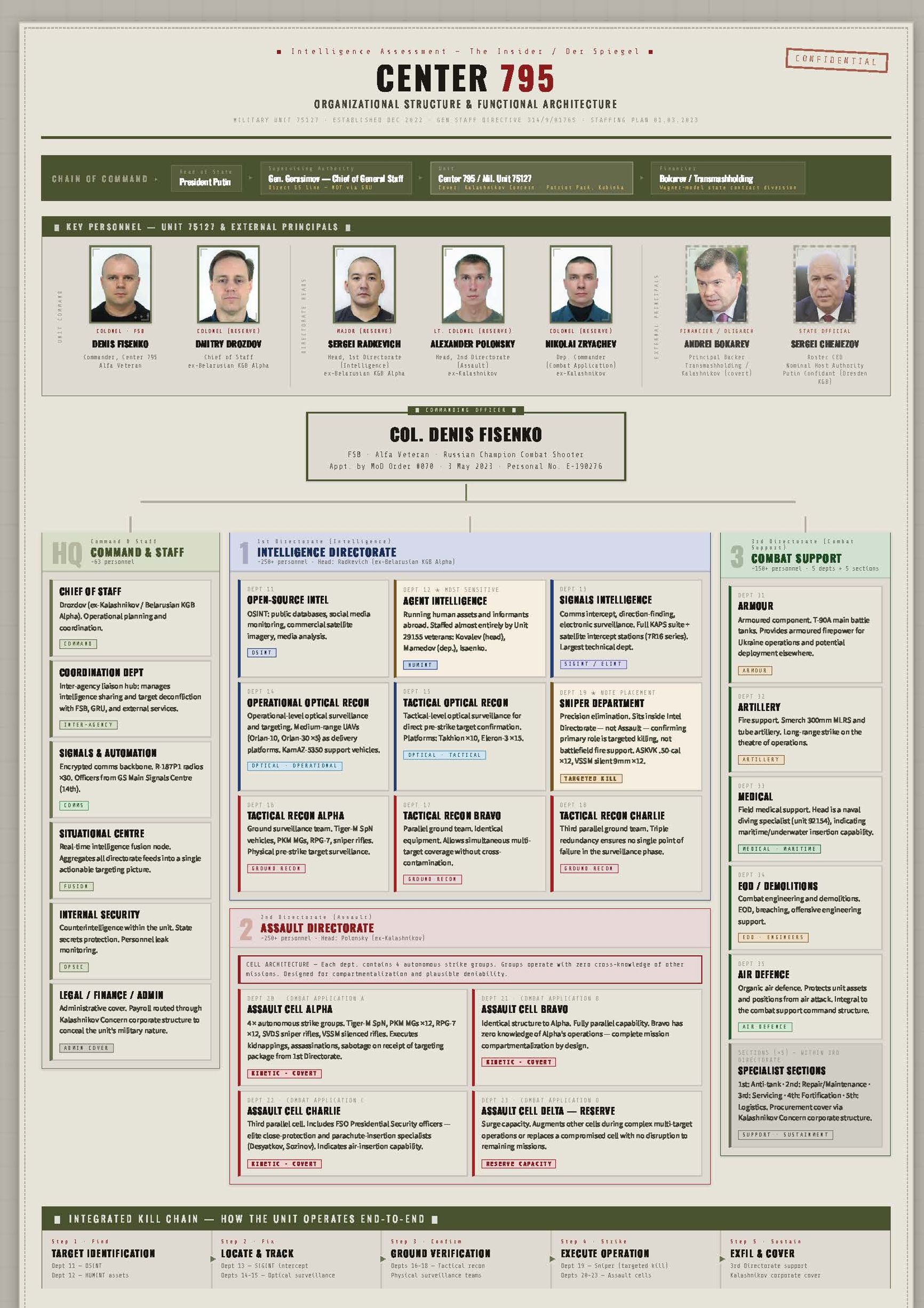
Center 795 fields approximately 500 officers divided into three directorates. The organizational blueprint, corroborated by staffing spreadsheets and a separate internal org chart obtained by The Insider, describes a fully self-contained combined-arms formation capable, in theory, of conducting independent military and intelligence operations without external support.
The Intelligence Directorate, the unit's largest, runs nine departments spanning the full spectrum of modern surveillance. Its 11th Department handles open-source intelligence — social media monitoring, commercial satellite imagery, public databases. The 12th, the most sensitive, runs human agents abroad; it is staffed almost entirely by veterans of Unit 29155, the GRU assassination directorate whose operatives poisoned Sergei Skripal in Salisbury. The 13th handles signals intercept, operating a full suite of radio-technical intelligence equipment including satellite intercept stations. Departments 14 and 15 conduct optical reconnaissance at operational and tactical levels respectively, using Orlan and Eleron drone platforms as delivery mechanisms for what is, at its core, a visual intelligence-gathering function. Three parallel ground surveillance teams — Departments 16, 17, and 18 — provide physical pre-strike confirmation, operating with identical equipment precisely so that any one of them can cover any target without the others knowing. Department 19, the Sniper Department, sits inside the Intelligence Directorate rather than the Assault Directorate, a structural choice that suggests its primary role is not battlefield fire support but targeted liquidations.
The Assault Directorate (20) comprises four Combat Application departments, each containing four autonomous strike groups. The architecture is designed around a single principle: no group knows what the others are doing. A compromised cell cannot burn a parallel mission. The inclusion of FSO Presidential Security officers — specialists in close-protection and parachute insertion – as well as airborne Spetznaz alumni in the third of these departments indicates that the unit possesses air-infiltration ambitions that goes beyond anything Unit 29155 ever deployed. At the same time, some of the independent cells do employ, in commanding positions, former members of Unit 29155.
The Combat Support Directorate is where the unit's conventional warfighting ambitions become visible. Its five departments — Armor, Artillery, Medical, EOD, and Air Defence — are supplemented by five specialist sections covering anti-tank operations, maintenance, fortification, and logistics. The inventory includes T-90A main battle tanks and Smerch 300mm multiple-launch rocket systems. The medical section is headed by another former collaborant of Unit 29155, a military doctor who studied at the Kirov academy in St. Petersburg alongside Alexander Mishkin of Salisbury fame, and specializes in diving traumatology.
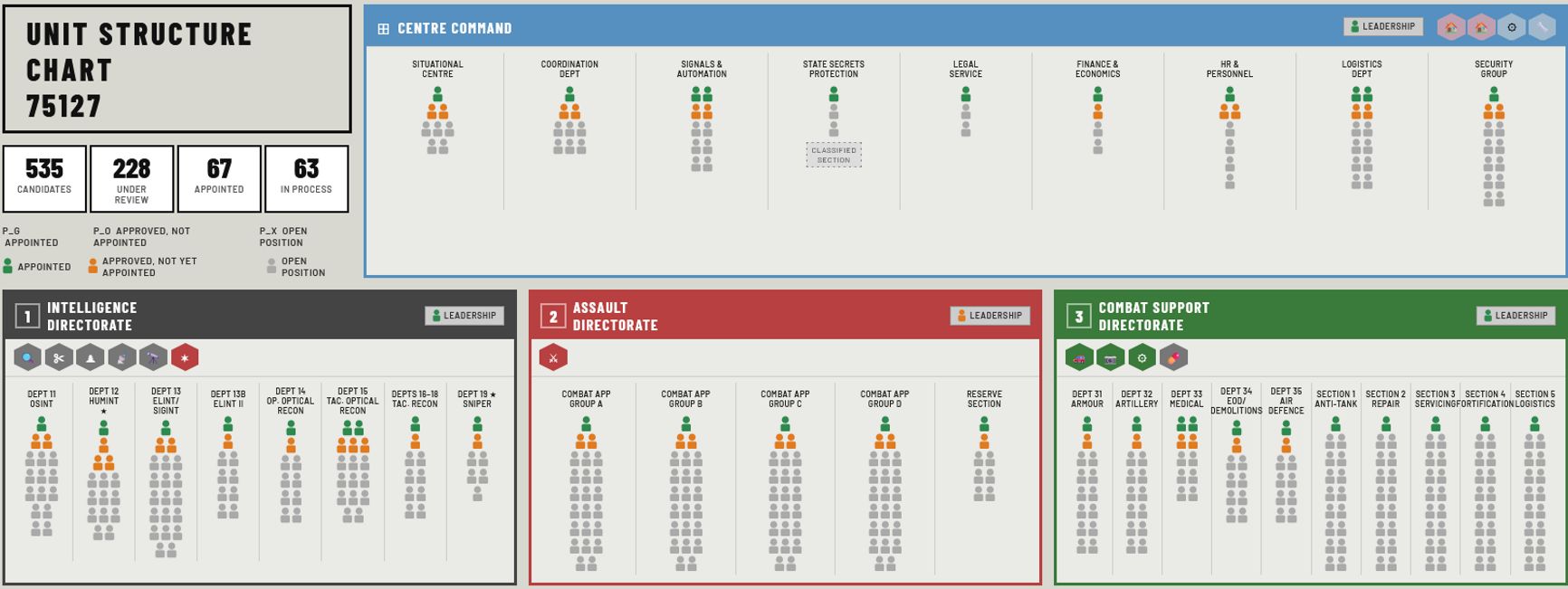
The selection process was rigorous, as roughly a third of candidates were rejected for “not having proven themselves in a unique way.” For the select few who make the cut, their compensation is unparalleled in the Russian army: each earns around $7,800 a month at the department head level, while Fisenko’s income is closer to $40,000 a month, or half a million dollars a year, based on leaked tax records.
At the same time, Center 795 was granted the authority to poach officers from various other units of the army, the GRU, the FSB, Rosgvardia (Russia’s National Guard), and even the FSO, the Kremlin’s elite protection force — not necessarily with the consent of the relevant agency. Center 795’s thus enjoys a comparatively higher status within the internal hierarchy of the Russian special services.
That civilian track in the recruitment pipeline is not incidental. It is the mechanism by which the unit's most senior figures entered without leaving a military footprint. Drozdov, the chief of staff, and Radkevich, the intelligence chief, both passed through Kalashnikov on their way in but were never linked to Russian military or security services. Both are veterans of the Alpha unit of the Belarusian KGB — likely deliberate recruitment from allied intelligence services whose officers carry no Russian institutional history and are not subject to scrutiny by foreign counterintelligence or investigators.
Center 795’s staffing drew heavily on the FSB's Center for Special Operations (not to be confused with Averyanov’s similarly named outfit) rather than on officers with a career history inside the Ministry of Defense. The majority came from FSB's Alfa team, but the recruiting net was cast wider. Among the unit's senior figures are veterans of an even more obscure provenance: the Alpha unit of the Belarusian KGB. Fisenko's deputy, Dmitry Drozdov, served in Belarusian intelligence under the alias “Dmitry Zaplavnev,” while Intelligence Directorate chief Sergei Radkevich operated there as “Sergei Baskhimdzhiev.” Both ended their Belarusian careers around 2017 and passed through corporate roles at Kalashnikov before arriving at Center 795.
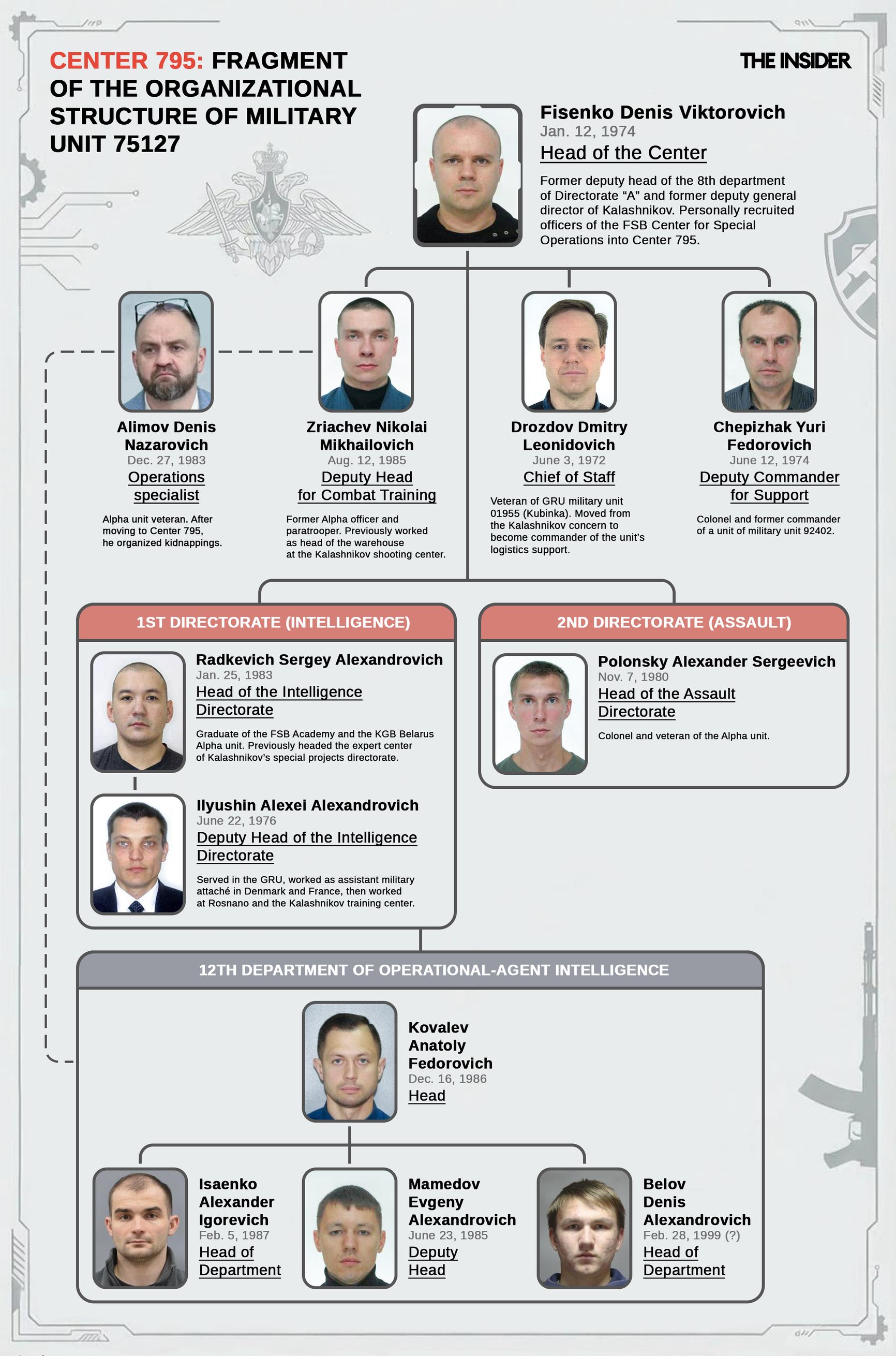
A senior deputy to Fisenko, the staffing spreadsheet reveals, is Lt. Gen. Alexei Iliushin. His CV, attached to the PowerPoint presentation, was that of a polymath: he speaks four languages (including Danish and Norwegian), wrote textbooks for Russian military academies, authored a military terminology dictionary, set a program for recruiting future GRU cadres at Russian universities, and conducted numerous “intelligence gathering and informational missions” while embedded at Russian embassies. His career abroad ended when the DGSE, France's foreign intelligence service, caught him stretching the acceptable boundaries of intelligence-gathering under diplomatic cover. In 2014, while based in Paris, he tried to bribe a person close to then-President Francois Hollande to obtain compromising personal information on him. Iliushin was promptly declared persona non grata. Between that ignominious exit from international espionage and his appointment to Center 795, he had somehow positioned himself as a nanotechnology expert and claimed to have supervised projects for development of “new lithium-ion-based energy storage systems” as well as “terahertz-range radiation sources for the detection and neutralization of explosive devices.”
Bridging the FSB-dominated unit and the GRU's institutional networks is the 12th Department — the operative intelligence section led by Anatoly Kovalev, a GRU officer whose travel records and communications indicate prior work for Unit 29155. Beneath Kovalev are Andrei Isaenko, Evgeny Mamedov, and Denis Belov, all based at the GRU's Khoroshevsky Highway headquarters.
Denis Alimov, now sitting in a Colombian jail cell, coordinated his work within the 12th Department. However, as his leaked communications show, he had something of a special agent status, reporting directly to Nikolay Zriachev, а veritable Forest Gump of Russian intelligence who had served in GRU’s airborne Spetsnaz unit before being poached by FSB’s Alfa and subsequently by the Kalashnikov Concern. As of 2023, Zriachev was granted a new, hybrid role as deputy commander of Center 795.
In the early 2000s, Alimov served in the OMON — the Russian riot police — in the southwestern Russian city of Stavropol before transferring to the FSB's Alfa unit at the Center for Special Tasks in Balashikha, a suburb on the eastern outskirts of Moscow, around 2008. This is the same facility where Vadim Krasikov, the assassin who killed Chechen dissident Zelimkhan Khangoshvili in Berlin’s Tiergarten Park in 2019 and was later returned to Russia from Germany as part of a U.S.-brokered prisoner exchange, received his training.
Within the Alfa unit, Alimov worked under deputy head Yuri Vasilievich Polishchuk, focusing on internal Russian tasks in close collaboration with the FSB's Second Service, which specializes in counterintelligence. He also maintained strong contacts in the counterterrorism directorate, including officers working the North Caucasus beat. Leaked Telegram communications reviewed by The Insider place Alimov unambiguously within Alfa's circle: he regularly celebrated the unit's unofficial annual day, a tradition shared among active members and veterans. He also maintained a direct personal relationship with Ramzan Kadyrov, the warlord-president of Chechnya.
In 2023, after his transfer to Center 795, Alimov was initially tasked with relatively mundane domestic operations — assisting Kadyrov in locating a dissident nephew who had gone missing in Moscow and using his former FSB contacts to help clear cargo shipments crossing between Russia and Russian-occupied Ukraine. He saturated his otherwise mundane workdays with obsessive exercise and consumption of steroids. Open source data shows that his phone number was a member of several Telegram group chats focusing on expanding his build through anabolics, which wasn’t without its apparent pitfalls. Among the questions Alimov posted to the channel was: “How to continue muscle-growth while getting rid of side-effects such as man-boobs?”
By 2024, the scope of his non-fitness preoccupations had expanded considerably. Alimov was building a recruitment network for operations in Ukraine and simultaneously prospecting for proxy agents abroad. A key source of candidates was his own Rolodex of Chechens he had personally jailed over alleged involvement in armed groups in the Caucasus. Many held pending or unexpired prison sentences — making them, in the logic of Russian intelligence, ideal candidates for placement abroad, with their ideological history providing plausible cover as political refugees. Leaked correspondence suggests that at least some of these initiatives succeeded: one former militant with links to the anti-Kadyrov Chechen diaspora in Europe, Shamsudin A. (The Insider withholds his last name as we cannot be certain he was aware of the goals of the mission he was tasked with) received a passport and left Russia, initially for Istanbul. His traces go cold after that.
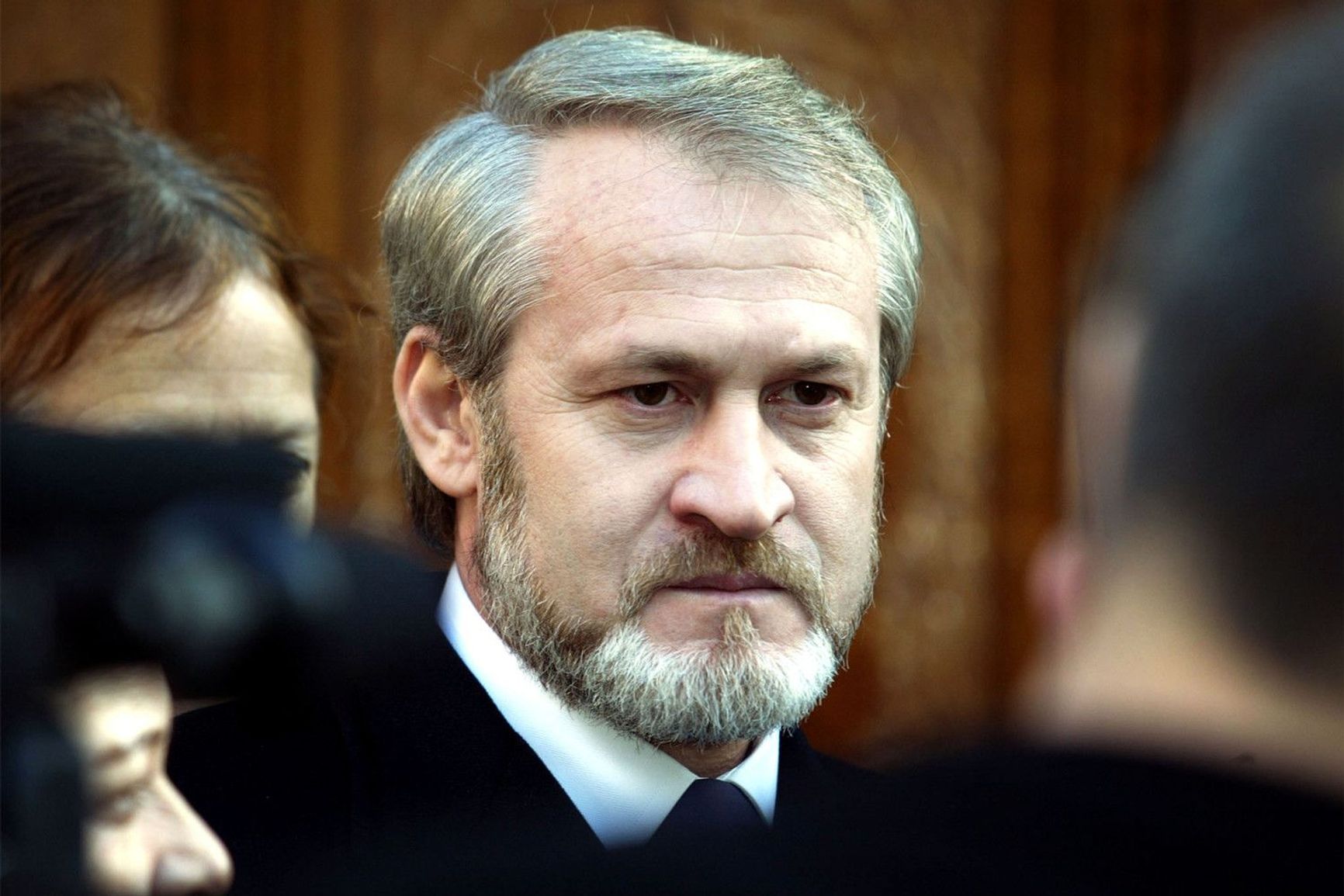
By the end of 2024, Alimov's focus had shifted decisively toward targeting dissidents perceived as enemies of the Russian state. Drawing on his history of prosecuting Chechen separatists, most of his assigned targets were members of the Chechen diaspora in Europe who sought independence from Russia and were critical of Kadyrov. A central focus became the Zakaev family, whose paterfamilias, Akhmed Zakaev, is the acting prime minister-in-exile of the unrecognized Chechen Republic of Ichkeria and a prominent enemy of Kadyrov.
Alimov had offered a bounty of $1.5 million for each target — dead or deported
To execute the operation on Western soil, Alimov required a local operative, someone with mobility in Europe and no obvious ties to Russian intelligence. He found one in Darko Durovic, a Serbo-Croatian speaker living in the United States (his precise background remains under seal in court documents). The language in the indictment suggests both of the primary targets hail from a “republic” within Russia, a term that applies to several regions, Chechnya prominent among them. Federal prosecutors allege Alimov recruited Durovic as his primary field asset for the operation.
The financial terms were explicit. During a meeting in Moscow in October 2024 — held, with considerable symbolic audacity, at a restaurant within walking distance of the FSB's Lubyanka headquarters — Alimov handed Durovic a down payment of $60,000 and promised a further $1.5 million for each target successfully “deported to Russia.” If the operation succeeded and further targets were identified, Durovic was told, a third individual wanted “dead or alive” could yield a bounty exceeding $10 million.
Center 795 had been designed, at considerable institutional expense, to be “air-gapped” — sealed against the kind of electronic penetration that had compromised previous Russian intelligence operations. Its commanders had taken precautions: encrypted messaging applications, pseudonymous identities, compartmentalized communications. What they had not accounted for was the linguistic incompatibility of their own operatives.
Alimov spoke Russian. Durovic spoke Serbian. Neither commanded the other's native tongue at the level sufficient for operational communication. Their solution was straightforward and, as it turned out, catastrophic: they used Google Translate, converting Durovic's Serbian field reports into Russian for his handler, and Alimov's Russian instructions back into Serbian for his agent.
The messages themselves were transmitted through encrypted applications that the men believed to be secure. But Google operates through servers in the United States, which fall squarely within the reach of an FBI surveillance warrant. Armed with a court order, investigators were able to access the logs of these translations directly from the service provider, reading the clear-text content of the entire operational communications thread in real time, even as Alimov and Durovic believed themselves protected by end-to-end encryption.
The surveillance logs, portions of which have been quoted in a newly unsealed U.S. grand jury indictment, read at times like an absurdist document: two operatives of Russia's most secretive assassination unit conducting a murder-for-hire plot through a consumer translation tool, their every instruction and status report preserved in legible, timestamped entries on an American company's servers. It was, as a source close to the investigation later noted, even better than a wiretap because it arrived transcribed.
For example, on November 28, 2024, in connection with one of their “projects,” Durovic messaged Alimov, writing: “at this time I cannot confirm the location in New York, because I am in Montenegro. I will return to New York around December 20, and will try to find him in New York .... [He] tries to make an impression that he is always in the EU in order to disguise his trace, but in reality, he is in the USA most of the time. This is the information I have received from my contacts.”
Earlier that month, Durovic even used search engines to research what he likely sought as his murder weapon — “Glock 17,” “Glock 21,” “Glock 22” — and where to obtain a 22 in Podgorica, Montenegro.
A separate “project,” Durovic wrote Alimov on December 19, concerned a target who spends his time in a “white villa, near the sea… surrounded with a white fence/wall, and there is some Islamic sign on the gate.” The problem was finding which villa, as there were several matching that description. “I believe we will find him soon, he can’t be moving around all the time. He’ll relax and fall into the trap at some point.”
Durovic also solicited help from an unnamed co-conspirator based in the United States. On Christmas Eve, 2024, he messaged them: “I have people who would pay a lot of money to have this person and others like him arrested and handed over to them. For now, I have 3 or more people who are wanted for arrest... For each person we get $1.5M USD. We need an associate who will not ask much, but provide us with that information and after I confirm the location (I will check it myself), we get the money.” The would-be sub-agent asked for a refundable retainer from Alimov to finance “a hunting team.”
To his co-conspirator, Durovic sang Alimov’s praises: “He’s very well connected... one of the closest men to an important government official.” In all likelihood, he was referring to Alimov’s proximity to Kadyrov, evidenced by the errands he ran for the strongman’s clan.
Alimov, according to the U.S. superseding indictment against him, supplied Durovic with a technical intelligence package including IP addresses and European telephone numbers previously used by one of these targets.
The use of Google Translate was not Durovic's only operational failure. He made two trips to Russia, in July and October 2024, attempting to disguise his destination by booking ostensible vacations to Turkey while continuing to Moscow on connecting flights under his real name. Each time he returned to the United States, he was questioned by FBI special agents who had access to his airline records. He flatly denied having visited Russia. The lies were transparent, and they compounded his legal exposure. The FBI, however, was content to wait — continuing to surveil him and read his virtual diary on Google Translate — before finally arresting him in March 2025.
Alimov's arrest at El Dorado Airport on Feb. 24, 2026, appears to have been the product of converging investigative threads. The FBI indictment refers to a European partner law enforcement agency that collaborated in the investigation alongside Colombian authorities. A clue to how this collaboration began may lie in Alimov's telephone contacts, which include Dejan Beric and Davor Savicic, Serbian recruiters of mercenaries for the Russian army in Ukraine who have long been in the crosshairs of Western intelligence agencies. Perhaps Alimov was introduced to Durovic, who holds dual Serb and Montenegrin citizenship, through these recruiters, and Durovic in turn got snared in a preexisting surveillance operation. What remains less clear is why, a full year after Durovic's arrest, Alimov judged it safe to travel internationally at all.
Records reviewed by investigators show him attempting to purchase a prepaid burner telephone in Russia just one day before his departure, as though the purchase of a disposable phone at the eleventh hour could undo the months of exposure that had already accumulated. He was traveling on what appeared to be a holiday itinerary, with an onward reservation in Cartagena — a cover consistent with the operational tradecraft of Center 795's officer corps. It was not enough. Colombian migration officials, acting with Interpol coordination, detained him on arrival from Istanbul.
In addition to the murder and kidnapping conspiracy charges, Alimov faces counts of providing material support to a designated terrorist organization and conspiracy to finance terrorism. Each of the primary charges carries a potential sentence of life imprisonment. He remains in Colombian custody pending extradition proceedings.
The most secretive unit in Russian military intelligence was undone not by a defector or a mole — but by a language barrier and a warrant
The exposure of Center 795 is bound to create lasting problems for Russia's intelligence services of a kind that cannot be managed by reassignment or denial. The unit's organizational architecture — its embedding within Kalashnikov, its dependence on Rostec infrastructure, its use of Patriot Park as an operational base — is now fully documented in Western court filings and in the work of open-source investigators. Until now, Fisenko and the other commanders of Center 795 had not been publicly identified. Their names, corporate histories, and operational roles — documented by The Insider through leaked materials, corporate registry records, military documentation, and communications intercepts — will make it considerably harder for them to continue working in the same mode. The entire unit has been compromised thanks to one operative’s sloppy tradecraft.
For Chemezov, the exposure carries its own risks. After years spent cultivating the image of a pragmatic technocrat skeptical of the Ukraine invasion (and of back-channel lobbying efforts aimed at getting himself and his family off of the U.S. government’s sanctions list), he now finds his name attached to an operation targeting dissidents in Western Europe — precisely the kind of activity he was not, by his own account, meant to be sponsoring. Chemezov’s enemies within the Russian system understood this vulnerability. However, whether or not the leaks that enabled this investigation originated in the atmosphere of institutional jealousy that surrounded Center 795 from its inception — from Averyanov's camp, or elsewhere in a security establishment where the unit's ambitions generated as much resentment as admiration — is a matter of speculation.
In the years since the exposure of Unit 29155, Russia has attempted at least twice to construct a successor assassination infrastructure capable of operating below the threshold of Western investigative visibility. Each attempt has foundered on some version of the same problem: not the sophistication of its adversaries, but the convenience-seeking of its own operatives. Unit 29155 was compromised because its officers couldn't be bothered with the basics: real passports, real names, hotel registries that matched airline records. Center 795 was meant to be different. It had the corporate camouflage, the compartmentalization, the freshly minted false identities. What it could not engineer away was the friction of human communication across a language barrier, and the fact that the easiest solution to that friction ran through servers in California.
The debacle of Alimov’s arrest on his maiden voyage is not the first — and certainly won’t be the last — tradecraft failure betraying the inability of Russia’s most secretive military unit to remain airgapped. A few months ago, the existence of this unit became a matter of public record in Russia proper, thanks to a court case brought by a former member of the Center against Fisenko over his unlawful termination. The court sided with the operative and ordered his reinstatement, along with “compensation of moral damages.” While the case file brought against Center 795 at the Odintsovo Military Court (where the unit is located) was quickly purged from the court system, it remains accessible at various Russian aggregators that automatically harvest new case file records, such as this one.
As Alimov awaits extradition in Bogotá, the apparatus he helped build — the tanks, the drones, the sniper teams, the carefully constructed Kalashnikov cover — has been laid bare. The irony of Center 795's undoing is not lost on those who tracked it: a unit designed to be the Kremlin's most untraceable instrument of coercion was exposed not through years of patient counterintelligence, not through a defector or a turned asset, but because two men needed to talk to each other and didn't share a language. Russia will build another unit. It will be more careful about the translation tools it uses. But whether it will be more careful about the people it recruits is a different question entirely.
Additional reporting contributed to this article. Court documents referenced are on file with The Insider. Some details have been withheld at the request of law enforcement authorities.
К сожалению, браузер, которым вы пользуйтесь, устарел и не позволяет корректно отображать сайт. Пожалуйста, установите любой из современных браузеров, например:
Google Chrome Firefox Safari